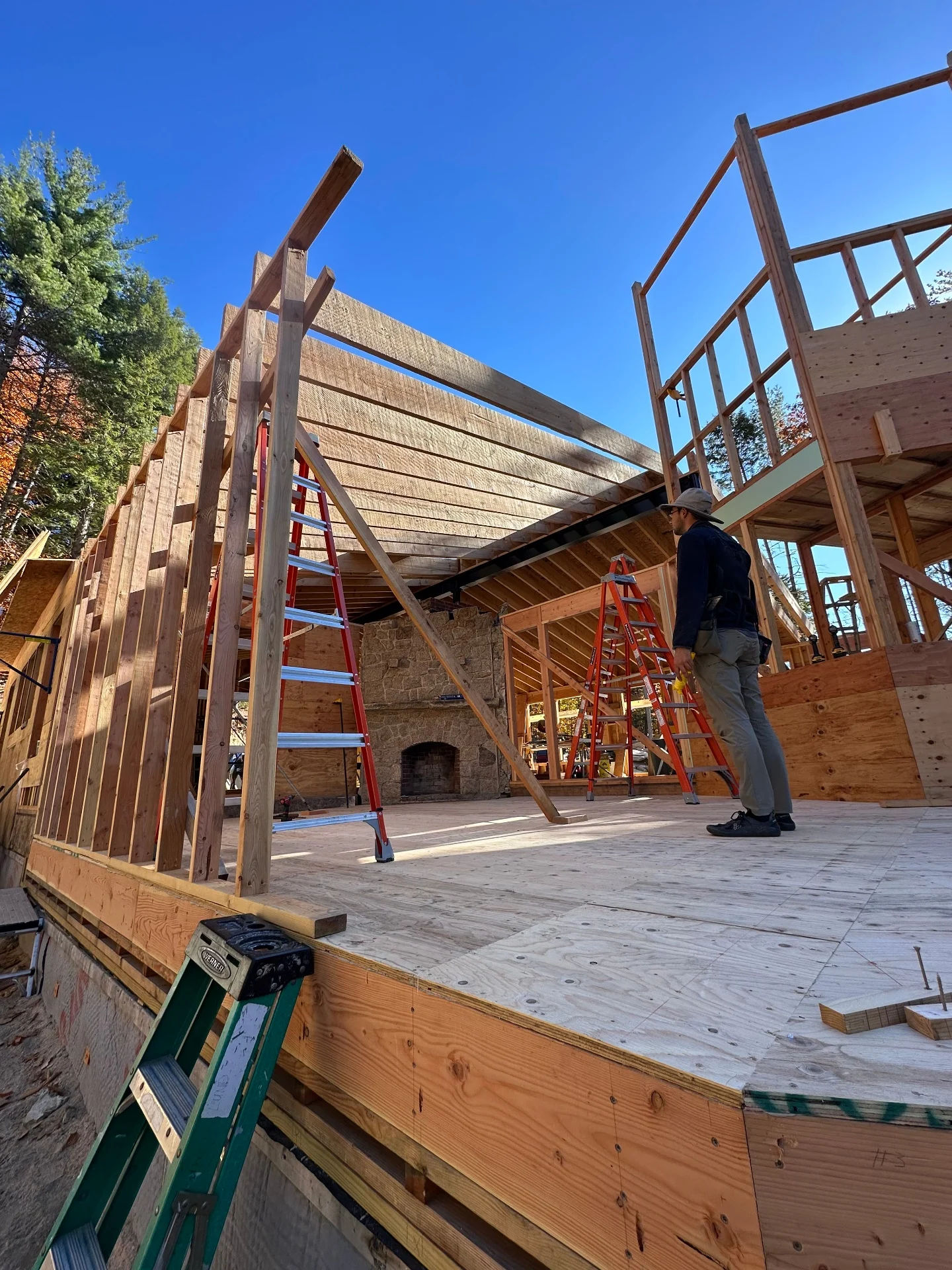
Planning a Summer Renovation in New Hampshire? Here's When to Start
If you want work done this summer, we need to talk now. That's not a sales pitch. It's just how renovation scheduling works in the Mount Washington Valley. The good contractors in this area book out. By May, most of the summer is already spoken for.
We hear some version of this every year: "We thought we'd call in June and get something going in July." We understand the impulse. But that's not how the schedule works, especially for anything more than a one-day job.
Here's what the process actually looks like, and what needs to happen before a crew ever shows up at your house.
The Schedule Is Already Filling Up
We're in mid-March. That sounds early to be thinking about a July project. It isn't.
Most renovation projects in New Hampshire, especially anything involving permits, subcontractors, or custom materials, have a lead time of 6 to 12 weeks before physical work starts. Sometimes longer.
Permits alone can take 4 to 6 weeks in Carroll County depending on the municipality and the project type. Windows, doors, and specialty materials often have lead times of 6 to 10 weeks from the order date. Your contractor needs to schedule around other projects and around their subcontractors, who have their own backlogs.
"If you want work starting in July, you need to be in the planning and permitting phase now. Not next month."
The builders who tell you they can start in two weeks in June either have slow seasons for a reason, or they're going to be managing your project between three others.
What Needs to Be Figured Out Before We Can Start
Before we schedule anything, a few things have to get sorted out. This is the part most homeowners underestimate.
Scope. What exactly is the project? "Kitchen renovation" can mean painting cabinets and new countertops, or it can mean gutting the room to the studs, moving a wall, and rewiring. Those are not the same job. Scope defines the budget, the permit requirements, the subcontractors needed, and the timeline. It has to be nailed down before anything else.
Budget. You don't have to know the exact number. But you need a real range. Not "we don't want to spend a lot" — something like "we're thinking somewhere between X and Y." That tells us whether what you want is achievable, or whether we need to rethink the scope.
Material selections. Cabinets, tile, fixtures, hardware. A lot of these items need to be selected and ordered before work starts, because they have lead times and they affect how everything else is built around them. Waiting to pick tile until the walls are torn out adds weeks.
What a Realistic Timeline Looks Like
Every project is different. But here's a rough picture for a mid-size renovation, something like a kitchen gut or a bathroom addition in the Conway area.
First conversation with a builder: now, or in the next few weeks. Walk-through, rough numbers, getting on the same page about what's realistic.
Scope and estimate: 2 to 4 weeks after the initial meeting. A vague estimate handed over in 24 hours isn't worth much.
Permit submission: once scope is finalized. In NH, most structural work, electrical, plumbing, and anything touching the building envelope requires a permit. Expect 4 to 6 weeks for approval in most Carroll County towns.
Material ordering: happens in parallel with permitting when possible. Some items need to be specified before the permit can even be submitted.
Construction start: realistically, 8 to 12 weeks after the initial conversation for a permitted project. A summer start is doable if you start the conversation now. A fall start is still a good outcome and leaves more runway to do things right.
Why Rushing the Front End Costs You Later
We've seen what happens when the planning phase gets compressed. Scope creep, because things weren't fully thought through before work started. Change orders, because decisions got made on the fly. Delays mid-project, because materials weren't ordered in time.
None of that is unique to any one contractor. It's what happens when a project doesn't have enough runway at the front end.
The planning phase feels slow. It is slow. That's the point. Getting it right before anyone picks up a tool saves time, money, and a lot of friction during construction.
If you have something in mind for this summer or fall, reach out now. We'll walk through the space, talk about what you're trying to accomplish, and give you an honest read on what's realistic. We work in Conway and throughout the Mount Washington Valley.